

How the Calusa understanding of soul, animal life, ritual, and power helped shape one of the core ideas behind Rising Tides Mysteries.
Author's note
One of the ideas behind the Kindred in Rising Tides Mysteries came from reading about the Calusa and their reported beliefs about the soul, death, and the close relationship between human life and the animal world. In some accounts, the dead were understood to continue through other living forms, especially animals.
For my fictional world, I turned that idea inside out. Instead of human souls passing into animals after death, I imagined people carrying an animal essence alongside them in life.
That shift is invention. The inspiration is not.
The more I read about the Calusa, the more compelling they became on their own terms: a powerful maritime society, rooted in the estuaries and mangrove coasts of South Florida, whose religion and politics were inseparable from the natural world around them. Their story is not fantasy. It is one of the most fascinating cultural histories in Florida.
Who were the Calusa?
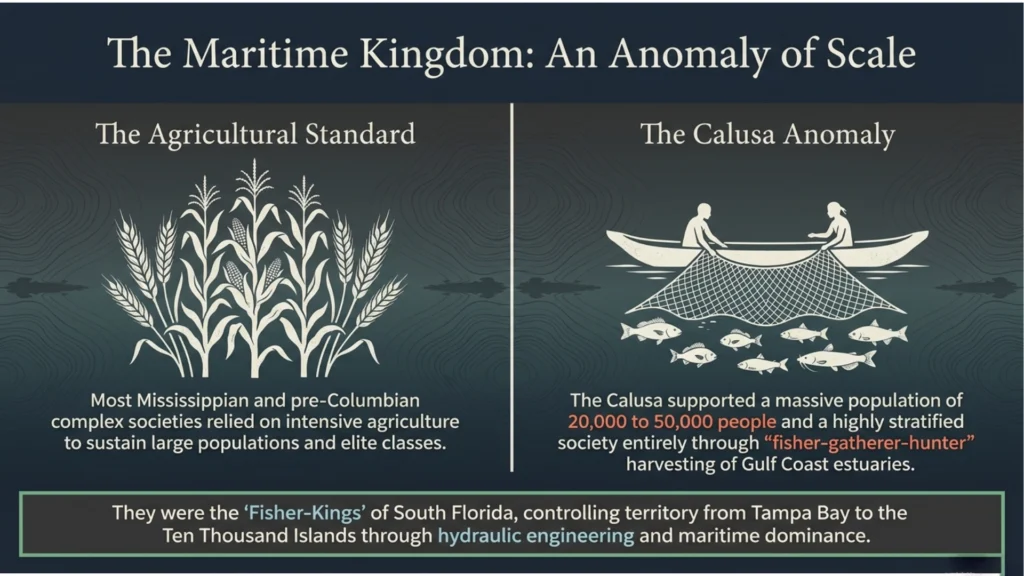
The Calusa were among the most powerful Indigenous peoples in precolonial South Florida. Their political center lay on the southwest Gulf coast, especially around places like Mound Key, but by the 16th century their realm extended broadly, from the southern edge of Tampa Bay down into the Florida Keys. Unlike many of the large, complex societies elsewhere in the Southeast, the Calusa did not depend on intensive agriculture. Instead, they built a dense, stratified society from fishing, estuarine harvesting, trade, tribute, and highly skilled environmental engineering.
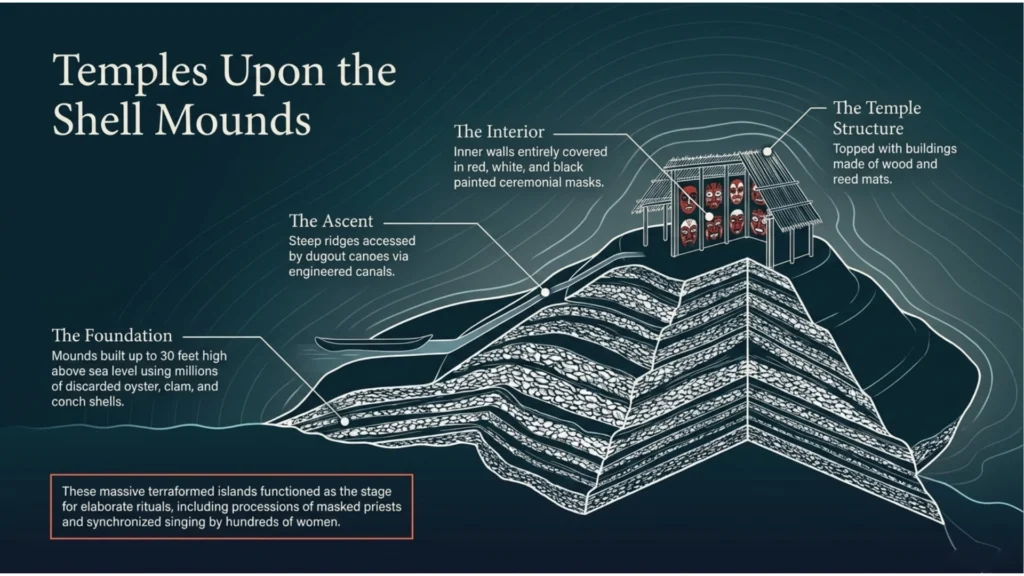
Archaeology has shown just how sophisticated that system was. The Calusa engineered canals, shellworks, and watercourts, managed fisheries, and built monumental shell mounds that supported settlements, ritual spaces, and political authority. They were not a marginal coastal group scraping by on seafood. They were a maritime power
A religion shaped by estuary, mangrove, and animal life
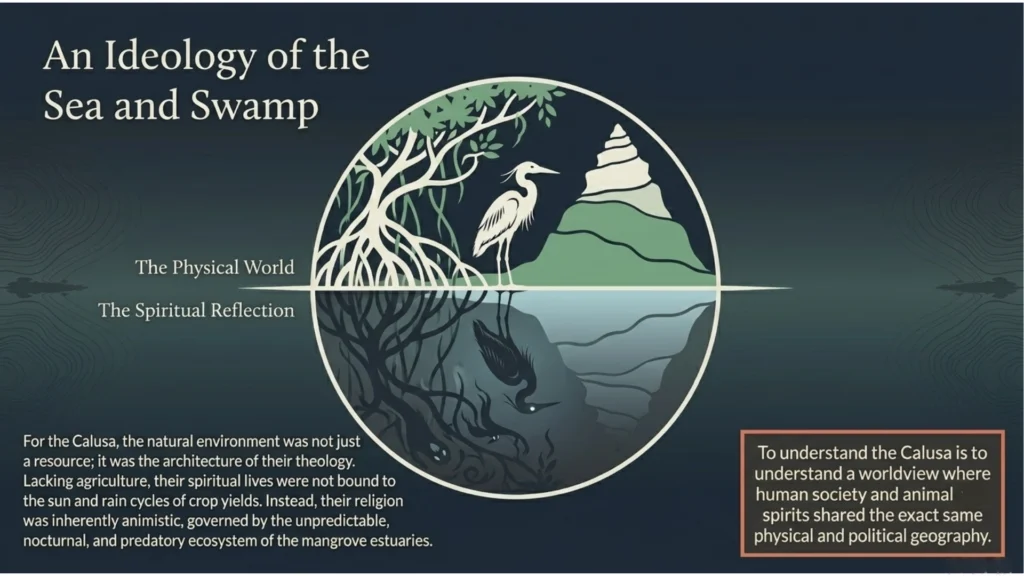
For the Calusa, the natural world was not background scenery. It was structure, force, and meaning. Their religious imagination seems to have been deeply shaped by the same estuarine environment that fed and organized their society: water, tides, fish, shell, birds, predators, and the unstable line between seen and unseen life. Spanish observers described the Calusa as having temples, images, priests, and a developed religious system that resisted Christian conversion with unusual force.
That resistance mattered. The Calusa were not simply “unconverted.” They had their own coherent sacred order, one tied to political power, ritual performance, and a worldview in which the human realm and the animal realm were tightly entangled. The estuary was not just where they lived. It was part of how they understood existence.
Souls, animals, and the afterlife
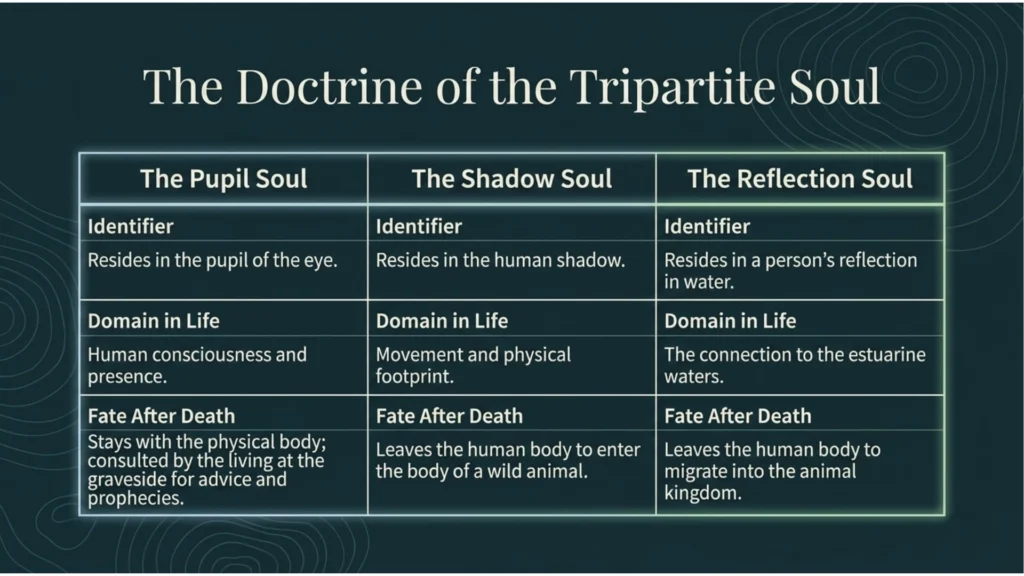
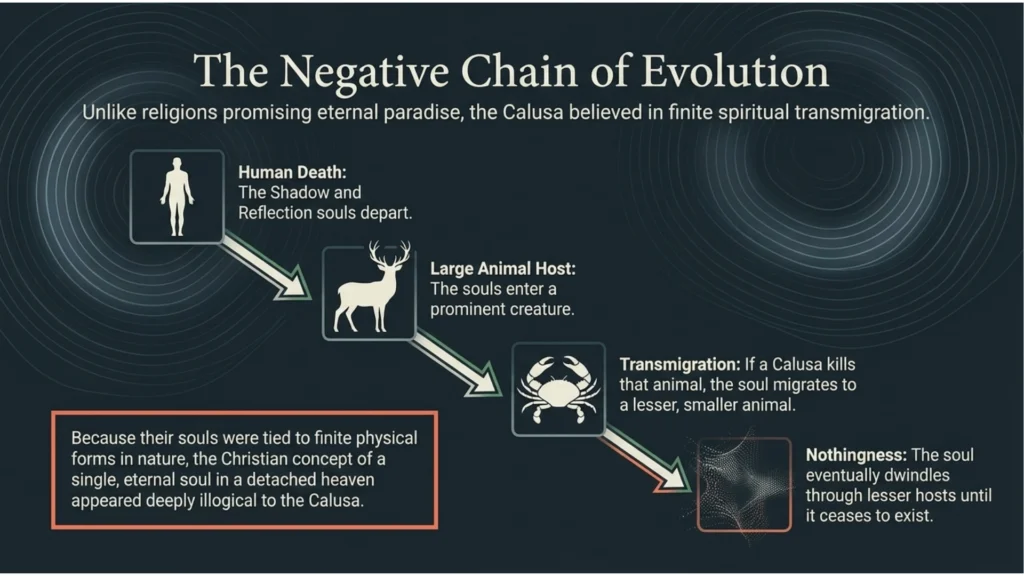
One of the most striking reported Calusa beliefs concerns the soul and what happens after death. Ethnohistoric sources describe a multi-part soul, with one aspect remaining associated with the body while others continued on after death. Later interpretations connect those departing soul-elements to animals and to a finite chain of transmigration through the natural world.
Whether every detail can be reconstructed with certainty is another question. Much of what we think we know about Calusa religion survives through fragmentary colonial accounts and later scholarship. But even allowing for uncertainty, one theme stands out clearly: the boundary between human and animal life was not imagined as absolute. The soul did not belong to a sealed, isolated self. It moved within a world already shared with other living beings.
That idea was the spark behind the Kindred. In my fiction, I reversed the direction. Instead of the soul passing into animals after death, people carry animal-presence with them while alive. But the root fascination remains the same: what if animal identity is not metaphor at all, but one of the deepest truths about a person?
Ritual, masks, and sacred performance
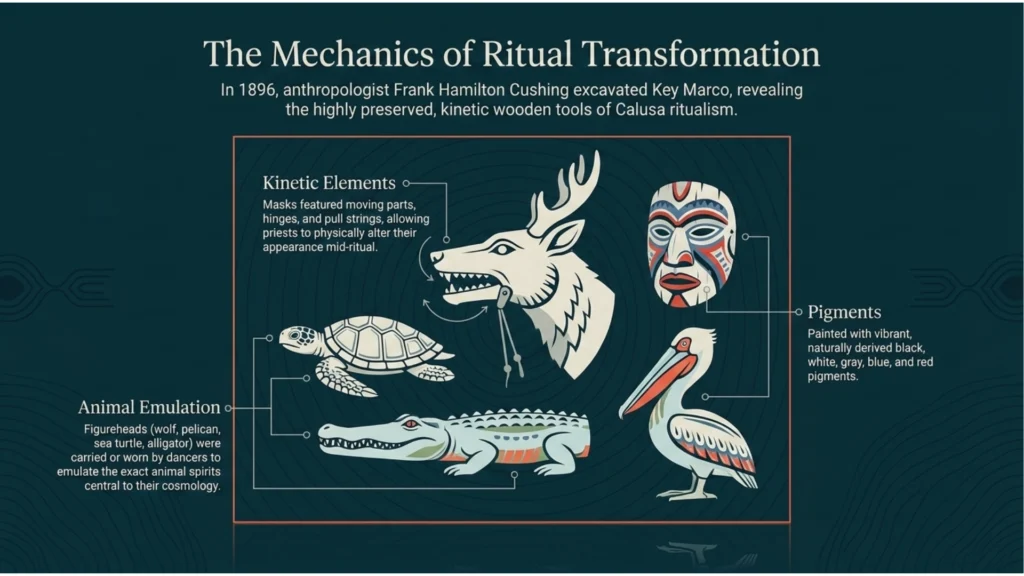
The Calusa did not leave behind a written theology, but they did leave evidence of elaborate ritual life. Spanish missionaries described temples and ceremonies, and archaeological finds from places like Key Marco preserve extraordinary ritual objects: masks, painted carvings, animal figureheads, and kinetic ceremonial pieces that suggest movement, transformation, and theatrical power.
These objects matter because they reveal religion as something enacted, not merely believed. Animal forms were not decorative. They were part of ritual technology, a way of giving visible shape to power, spirit, and transformation. In that sense, Calusa ritual life was not separate from politics or ecology. It linked all three.
Death, ancestors, and the divine right to rule
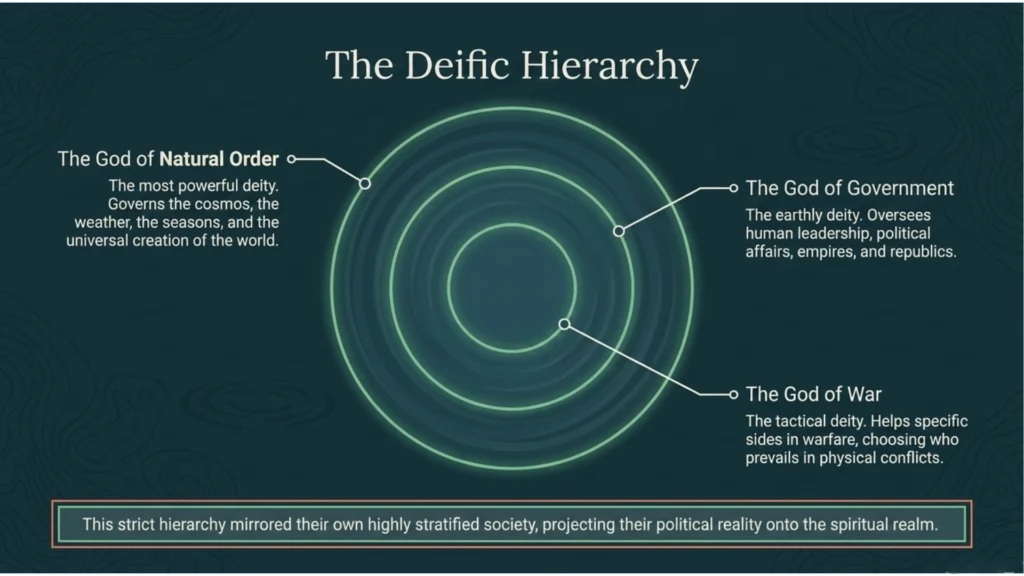
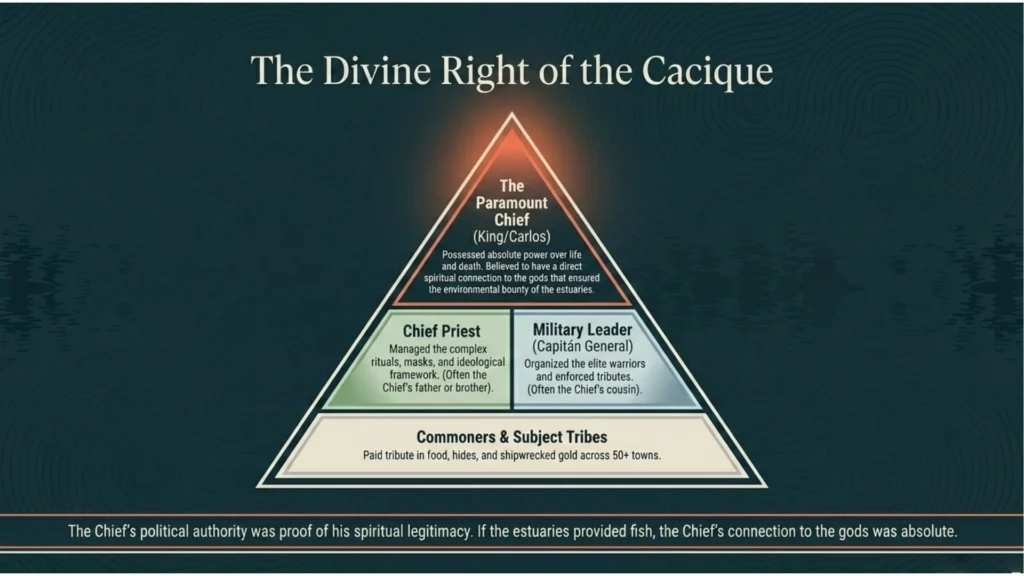
Among the Calusa, religion and government appear to have been tightly bound. Colonial-era accounts describe a paramount chief, strong social hierarchy, tribute relationships, and a sacred-political structure in which elite authority was tied to supernatural legitimacy. In other words, the chief did not just rule the people. His authority was embedded in the same cosmic order that governed ritual and environment.
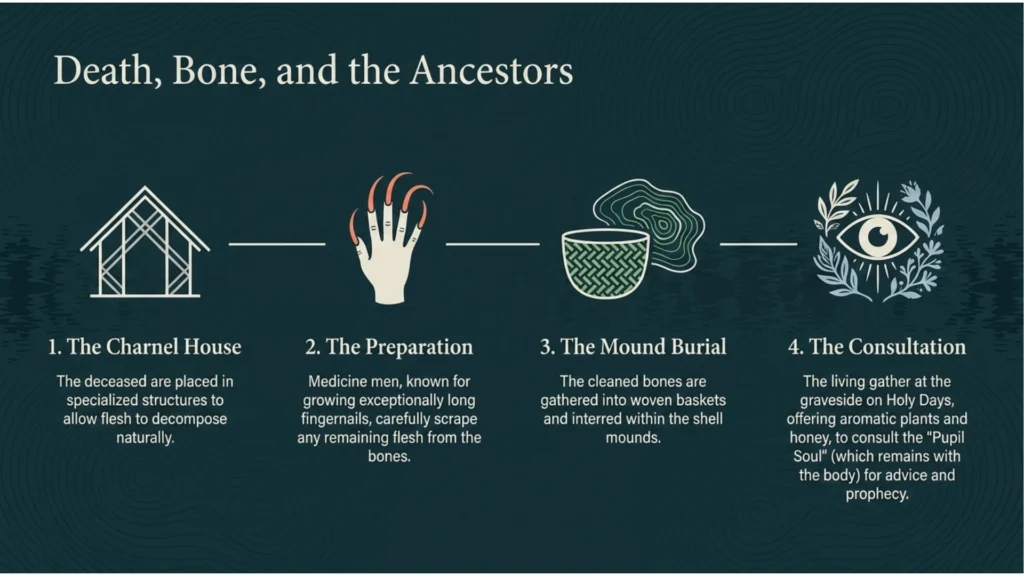
Burial practices also point to an enduring relationship between the living and the dead. The dead were processed, curated, and remembered in ways that suggest ancestors remained socially meaningful. In some accounts, living people sought guidance from the dead, blurring the line between political memory, ritual power, and spiritual presence.
Why the Calusa still matter to this story
The Calusa did not see nature as scenery. They lived inside a world where water, fish, shell, animal life, power, and spirit formed one continuous system. That vision is part of what made them so compelling to me as I built the deeper mythology behind Rising Tides Mysteries.
The Kindred are fictional. The Calusa were not. Their history deserves to be approached with care, curiosity, and respect, especially because so much of what survives comes through archaeology and colonial records rather than their own written voices. But even through those fragments, one idea comes through with remarkable force: the human world was never separate from the animal one. In the estuary, everything touched.
References
Goggin, J. M., & Sturtevant, W. C. (1964). The Calusa: A stratified, nonagricultural society (with notes on sibling marriage). In W. H. Goodenough (Ed.), Explorations in cultural anthropology: Essays in honor of George Peter Murdock (pp. 179–219). McGraw-Hill.
MacMahon, D. A., & Marquardt, W. H. (2004). The Calusa and their legacy: South Florida people and their environments. University Press of Florida.
Marquardt, W. H. (2001). The emergence and demise of the Calusa. In D. S. Brose, C. W. Cowan, & R. C. Mainfort Jr. (Eds.), Societies in eclipse: Archaeology of the Eastern Woodlands Indians, A.D. 1400–1700 (pp. 157–171). Smithsonian Institution Press.
Marquardt, W. H. (2014). Tracking the Calusa: A retrospective. Southeastern Archaeology, 33(1), 1–25.
Milanich, J. T. (2020). The Calusa: A savage kingdom? University Press of Florida.
Thompson, V. D., Marquardt, W. H., & Walker, K. J. (2018). Collective action, state building, and the rise of the Calusa. Journal of Anthropological Archaeology, 49, 28–44.