

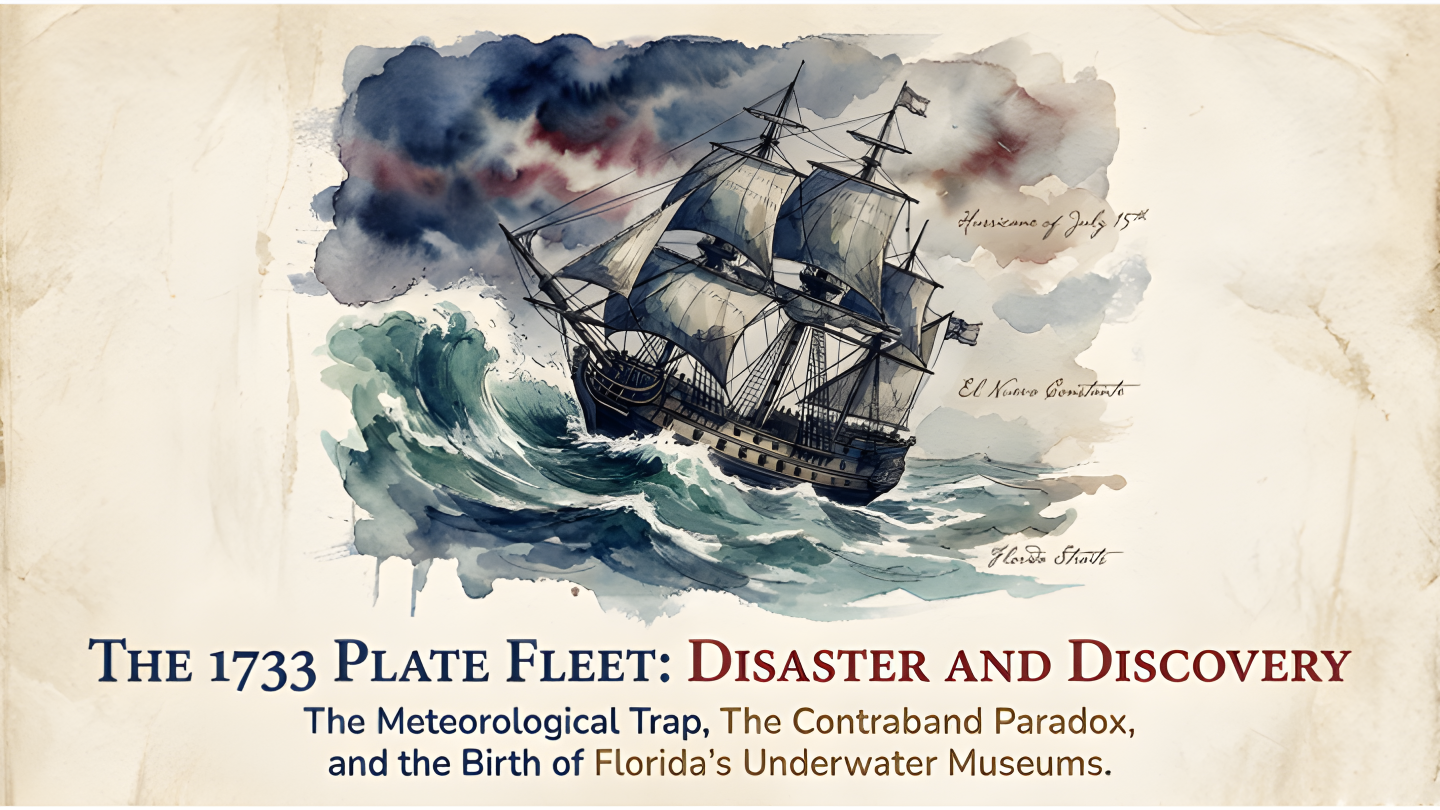
In The Lost Light, Sophie, Dylan, and Talia descend into the waters of the Florida Keys in search of the wreck of the Mourning Star—and the legendary object it carried, La Luz Perdida.
While Silas Merrick, the Mourning Star, and La Luz Perdida were born in my imagination, the disaster that sent the ship to the bottom was very real.
The following field notes explore the real 1733 Plate Fleet disaster: the hurricane, the wrecks, the remarkable Spanish salvage operation, and the underwater archaeological sites that remain in the Keys today.
An Empire Carried in Wooden Ships
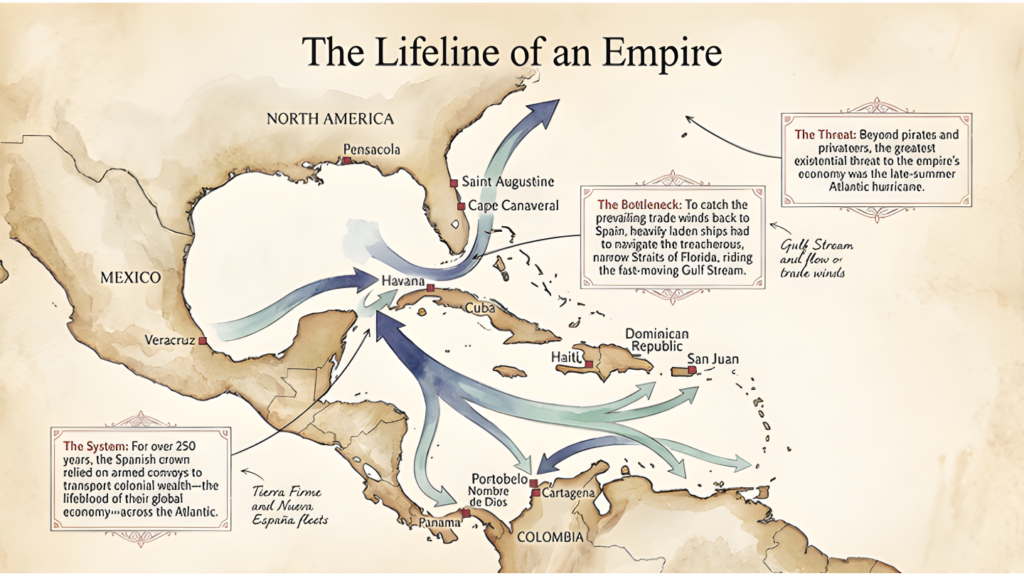
When we talk about the 1733 Plate Fleet, the word “treasure” tends to take over the story. Gold and silver were certainly aboard, but these ships represented something much larger: the maritime system that connected Spain to its American colonies.
For more than two centuries, fleets transported government revenue, private fortunes and commercial goods across the Atlantic. Ships arriving from different colonial ports assembled in Havana before attempting the hazardous voyage home.
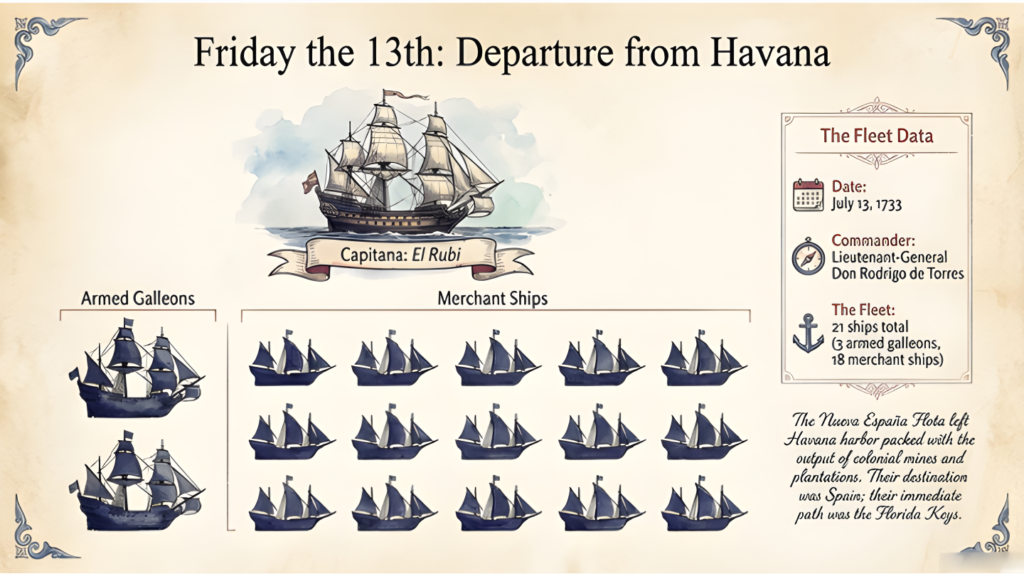
On Friday, July 13, 1733, the New Spain Fleet sailed from Havana under the command of Lieutenant-General Rodrigo de Torres. Its route would take it through the Florida Straits, between Cuba and the long, dangerous reef line of the Florida Keys.
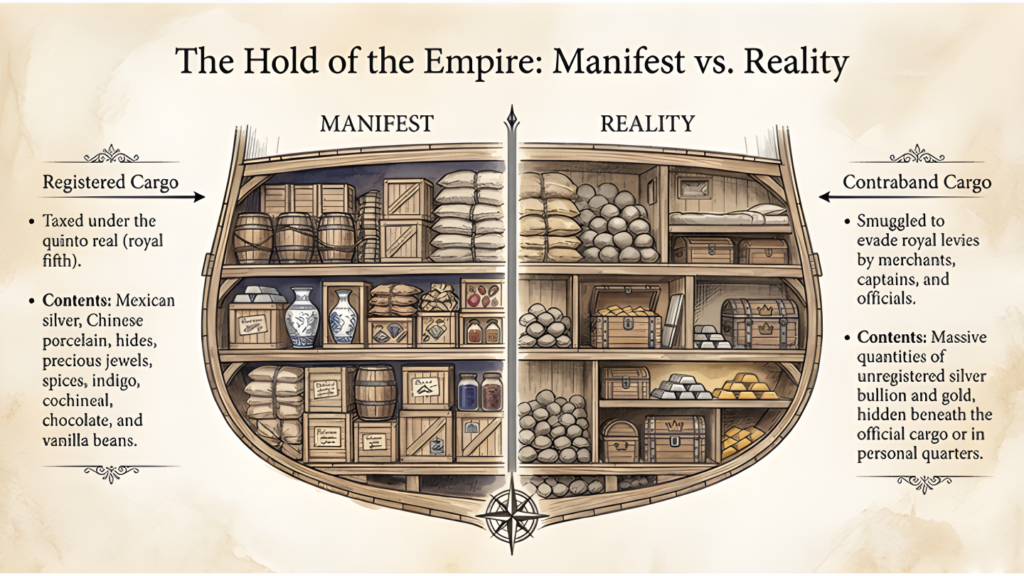
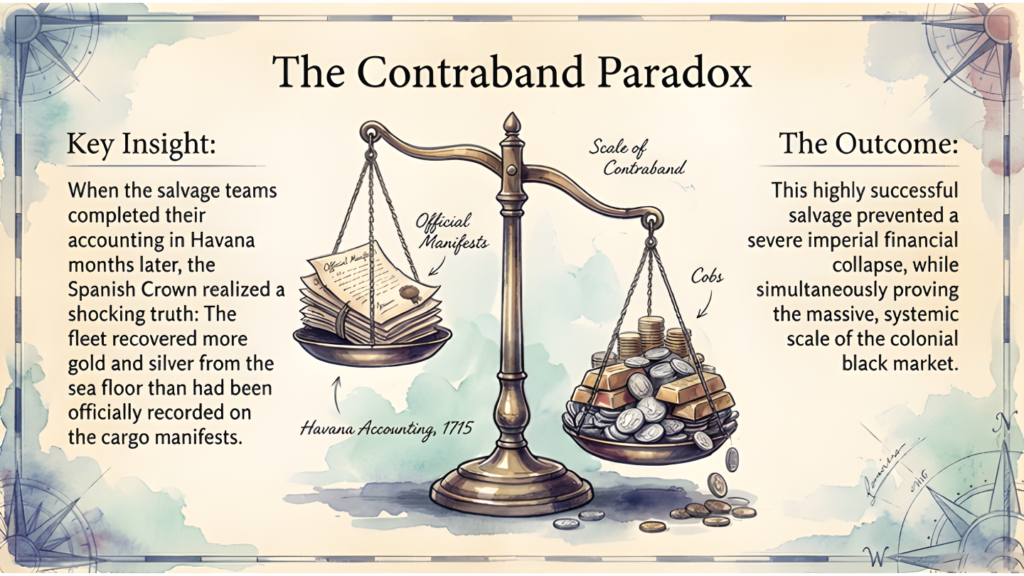
The official cargo included Mexican silver, Chinese porcelain, hides, spices, indigo, cochineal, chocolate and vanilla. But a ship’s manifest did not necessarily tell the complete story. Merchants, officers and passengers could evade royal taxes by concealing unregistered silver and gold among the legitimate cargo.
That hidden wealth would become one of the most revealing parts of what happened next.
The Hurricane and the Wrecking of the Fleet
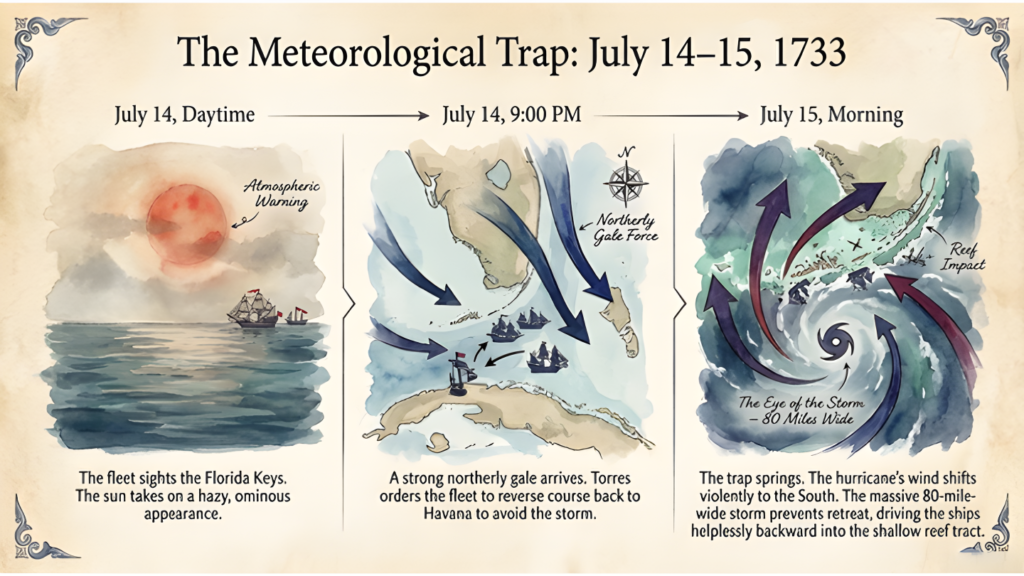
The first warning was a sudden change in the weather.
After the fleet entered the Florida Straits, the wind shifted and strengthened. Rodrigo de Torres recognized the danger and ordered the ships to turn back toward Havana. Sailing vessels could not simply reverse direction on command, however, and the geography of the Straits left the fleet very little room to escape.
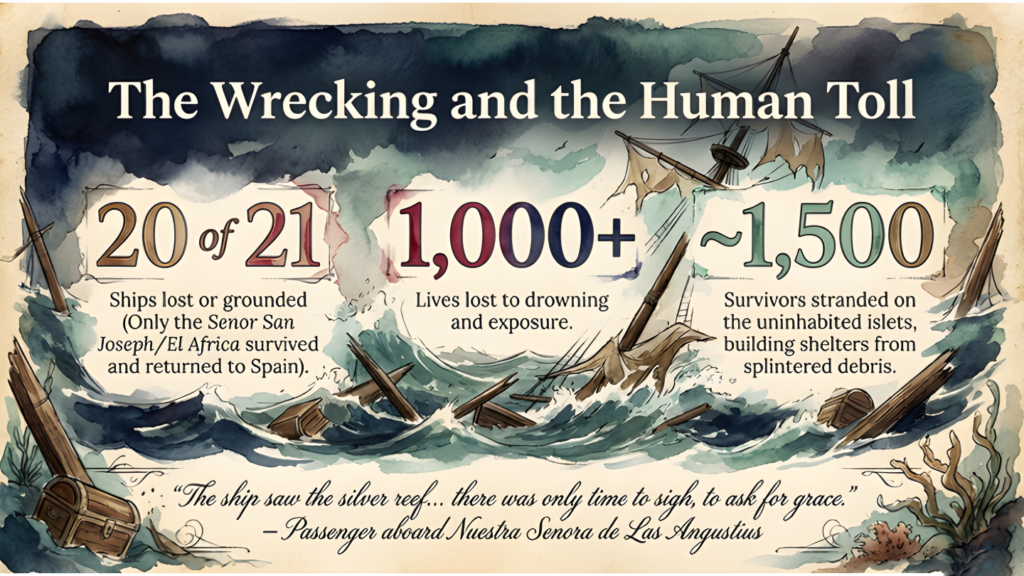
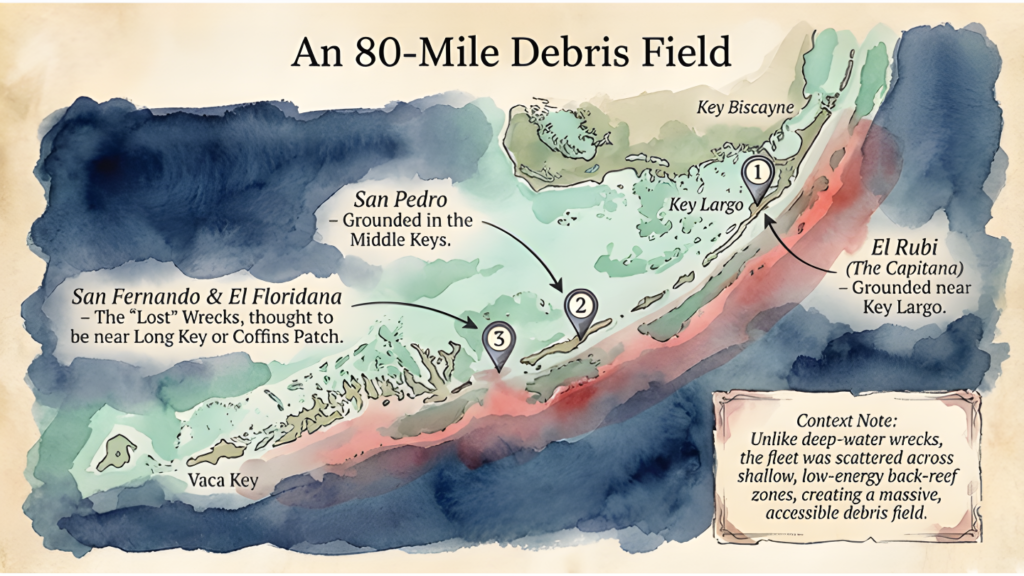
As the hurricane passed through the region, the wind changed direction again and drove most of the ships toward the reefs and shoals of the Florida Keys. By the morning of July 15, vessels were scattered along roughly eighty miles of coastline, from the Middle Keys into the Upper Keys.
Most of the fleet was wrecked, grounded or swamped. Survivors gathered on the low islands and made temporary shelters from sails and wreckage while they waited for help.
The shallow water that had trapped the ships also gave many people a chance to reach shore. It would soon make a remarkably effective salvage operation possible as well.
Rescue, Recovery, and the Contraband Paradox
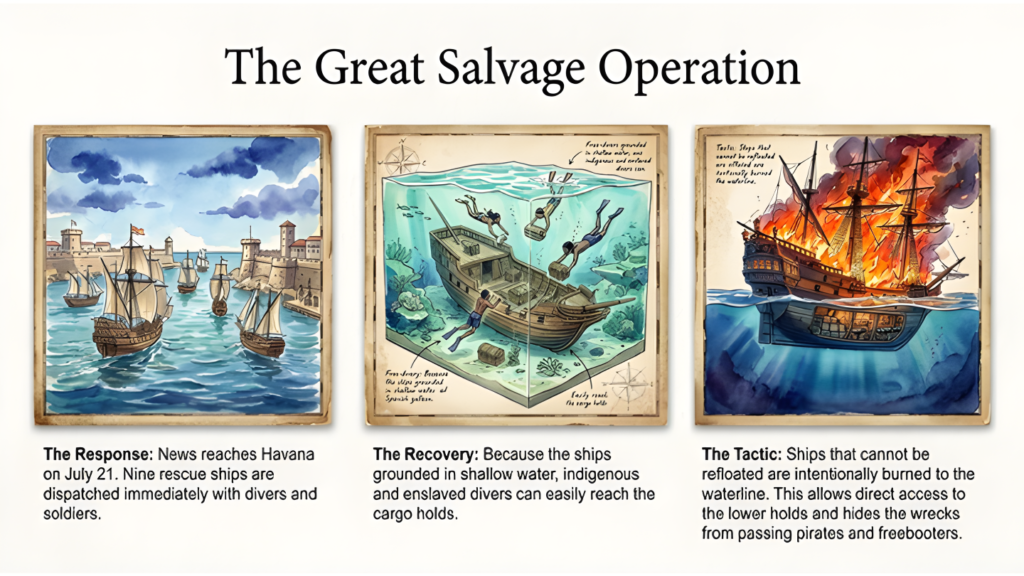
When word reached Havana, rescue and salvage vessels were dispatched with provisions, soldiers, divers and equipment. Camps were established near the wreck sites, both to shelter survivors and to organize the recovery.
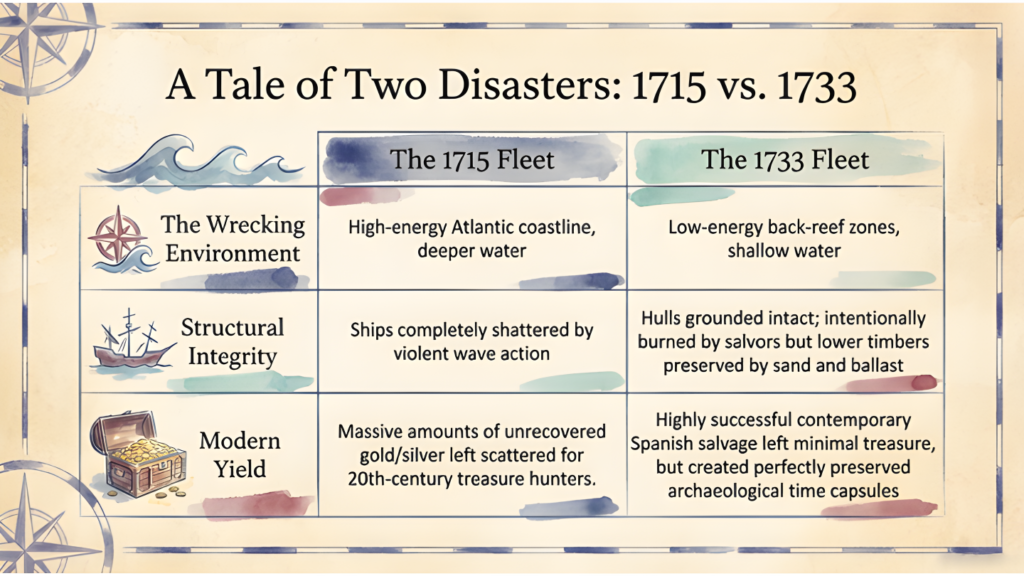
Because many vessels had grounded in shallow water, divers could reach their holds. Ships that could not be refloated were sometimes burned down to the waterline. That gave salvors better access to the lower portions of the vessels while making the wrecks less visible to pirates and opportunistic freebooters.
The Spanish recovery was extraordinarily successful. Salvage continued for years, and much of the registered cargo was recovered and eventually transported to Spain.
Then came the paradox: the amount of gold and silver recovered exceeded the amount recorded on the fleet’s manifests.
The disaster had exposed the scale of the contraband economy concealed inside the official imperial system. The same salvage effort that protected Spain from a greater financial loss also revealed how much wealth had been traveling outside the Crown’s records.
This is one important difference between the fleets lost in 1715 and 1733. The 1733 ships grounded in relatively shallow, protected waters, and Spanish salvors recovered much of their valuable cargo. Consequently, modern explorers found less abandoned treasure—but the wreck sites retained enormous archaeological value.
The San Pedro and the Fleet's Discovery
The San Pedro provides one of the clearest windows into this story.
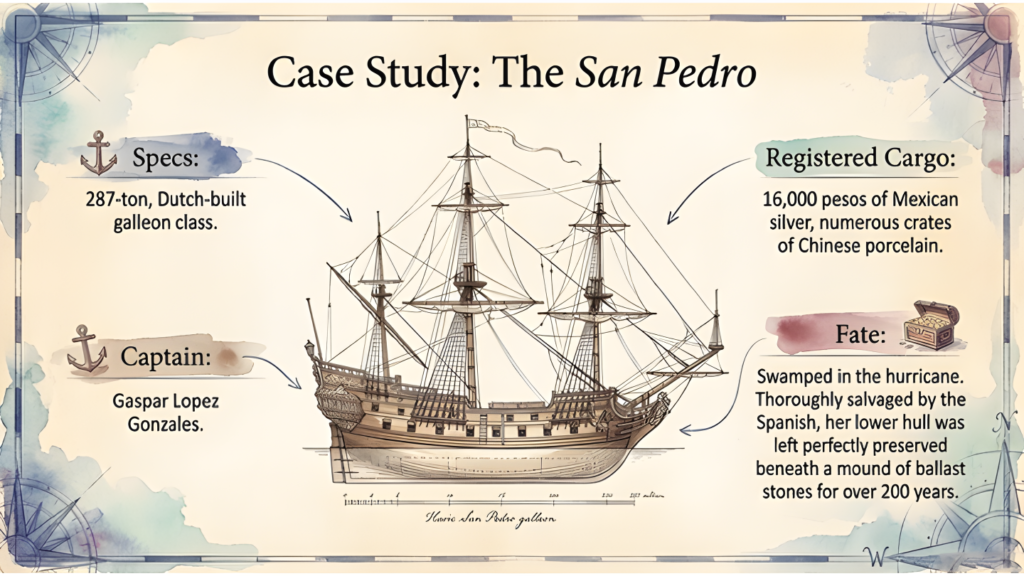
It was a 287-ton, Dutch-built vessel carrying 16,000 pesos in registered Mexican silver along with numerous crates of Chinese porcelain. It sank in approximately eighteen feet of water near Indian Key.
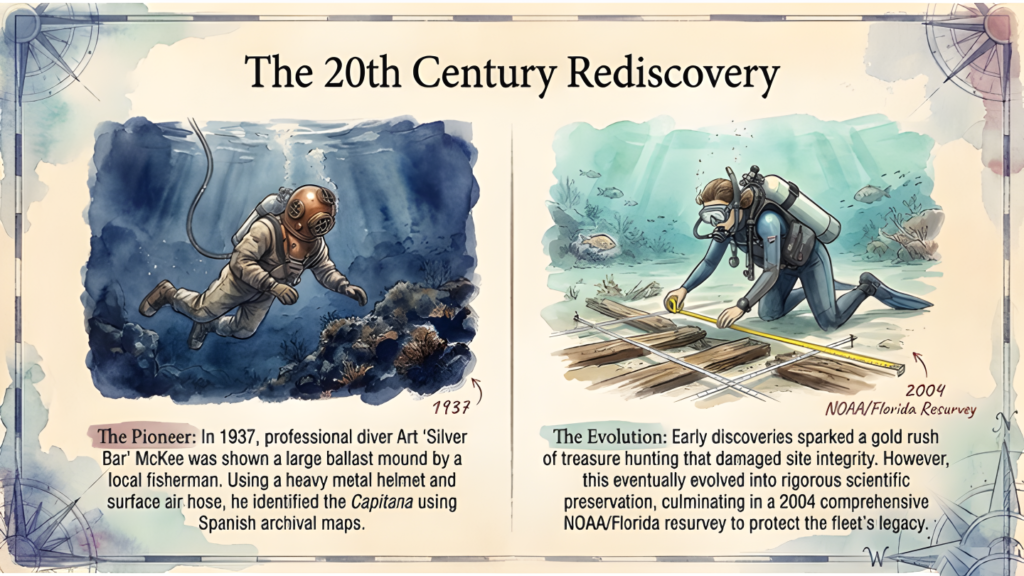
The wreck was relocated in the 1960s and was heavily worked by treasure hunters. Coins, anchors, cannons, rigging, hardware and cargo remains were recovered and removed before stronger protections were established.
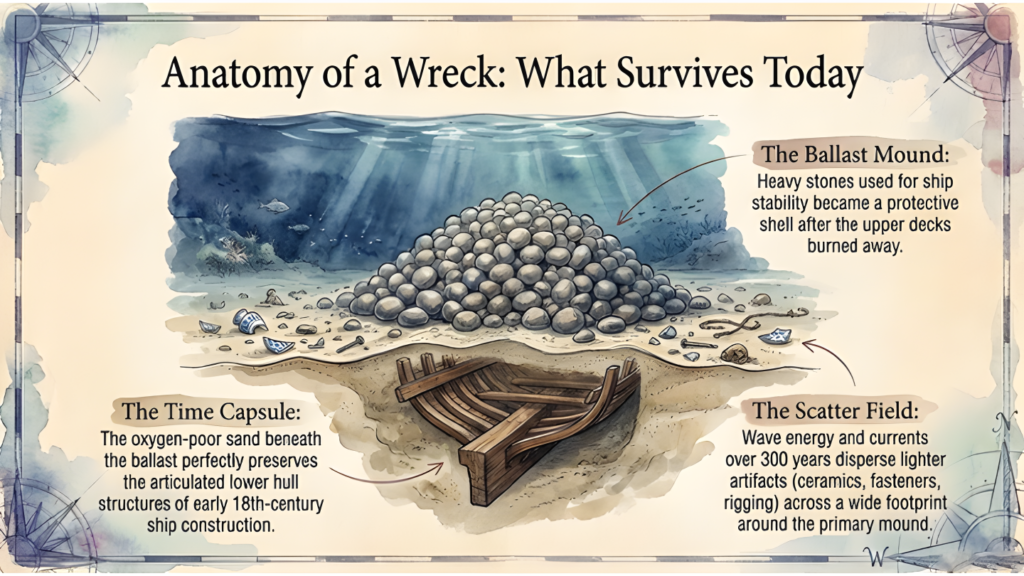
What remains underwater looks very different from an intact storybook galleon. The most visible feature is a mound of ballast stones, originally carried low in the ship to provide stability. Sand and sediment around the ballast can protect portions of the vessel’s lower structure, while lighter objects are scattered by waves, currents and centuries of storms.
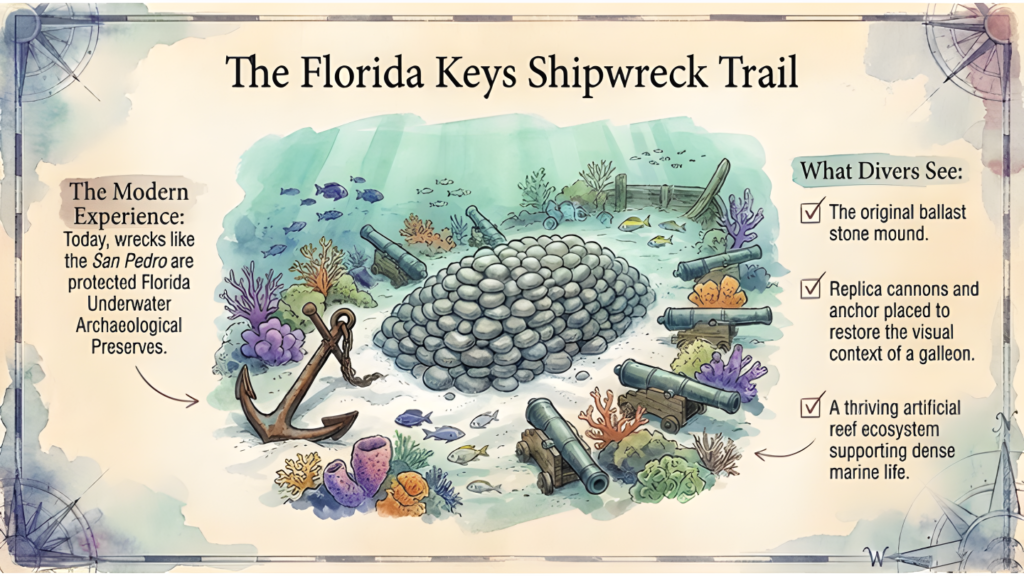
Today, the San Pedro is protected as a Florida Underwater Archaeological Preserve and is also part of NOAA’s Florida Keys Shipwreck Trail. Divers and snorkelers can see the original ballast mound, seven replica cannons, an anchor from another 1733 wreck and the marine community that has grown around the site.
The replicas help visitors understand the wreck’s original context, but the ballast and surviving archaeological material are the authentic remains. Nothing should be disturbed or removed.
Destruction, Preservation, and Legacy
The lasting story of the 1733 fleet is not simply one of lost treasure.
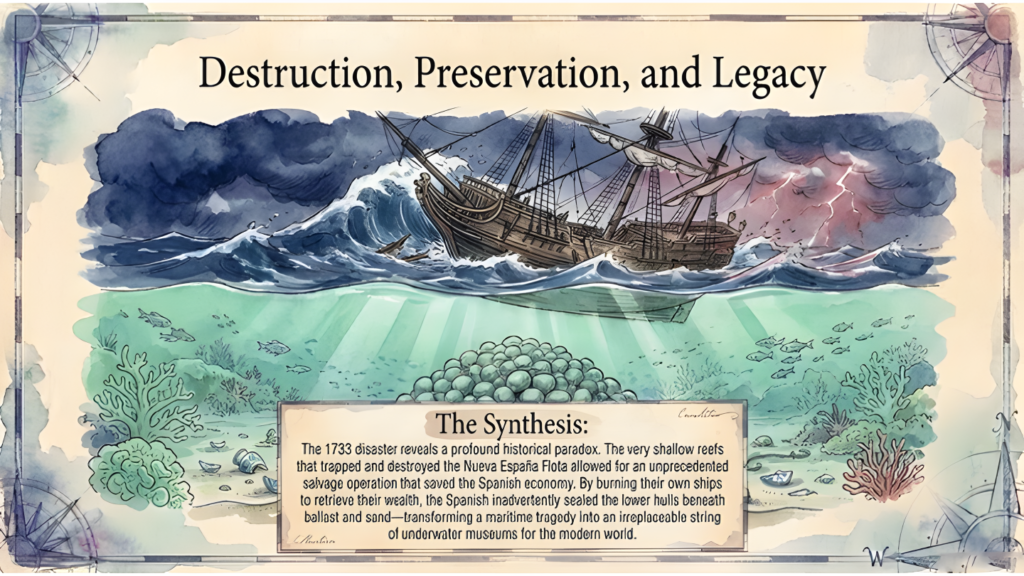
The same shallow reefs that destroyed or stranded the vessels made the eighteenth-century rescue and salvage operation possible. Burning the unsalvageable ships exposed their holds, but ballast, sand and sediment protected portions of their lower structures.
Centuries later, the sites attracted treasure hunters, archaeologists, historians and divers. Some were damaged before preservation laws and archaeological oversight caught up with the rush to recover valuable objects.
What remains is something more meaningful than a chest of coins. These wrecks are records of shipbuilding, colonial commerce, forced and free labor, smuggling, hurricane history and life at sea. They are also living marine habitats—some of the oldest artificial reefs in North America.
The sea did not preserve the fleet unchanged. It transformed it. And that transformation is what allows the story to continue beneath the waters of the Florida Keys.
References:
Florida Department of Environmental Protection. (n.d.). Conservation of the San Pedro. Florida State Parks. Retrieved July 29, 2026, from https://www.floridastateparks.org/learn/conservation-san-pedro
Florida Department of Environmental Protection. (n.d.). San Pedro Underwater Archaeological Preserve State Park. Florida State Parks. Retrieved July 29, 2026, from https://www.floridastateparks.org/SanPedro
Florida Division of Historical Resources. (2005). 1733 Spanish Galleon Trail: Fleet of 1733. Florida Department of State. https://info.flheritage.com/galleon-trail/fleetOf1733.cfm
Malcom, C. (2025, February 10). The disaster of the 1733 Nueva España Flota (New Spain Fleet) as reported in English newspapers. Florida Keys History Center. https://www.keyslibraries.org/post/vol-11
National Oceanic and Atmospheric Administration. (n.d.). San Pedro. Florida Keys National Marine Sanctuary. Retrieved July 29, 2026, from https://floridakeys.noaa.gov/shipwrecktrail/sanpedro.html
National Park Service. (n.d.). The Spanish treasure fleets of 1715 and 1733: Disasters strike at sea. U.S. Department of the Interior. Retrieved July 29, 2026, from https://www.nps.gov/articles/las-flotas-espanolas-de-1715-y-1733-desastres-en-el-mar-teaching-with-historic-places.htm