
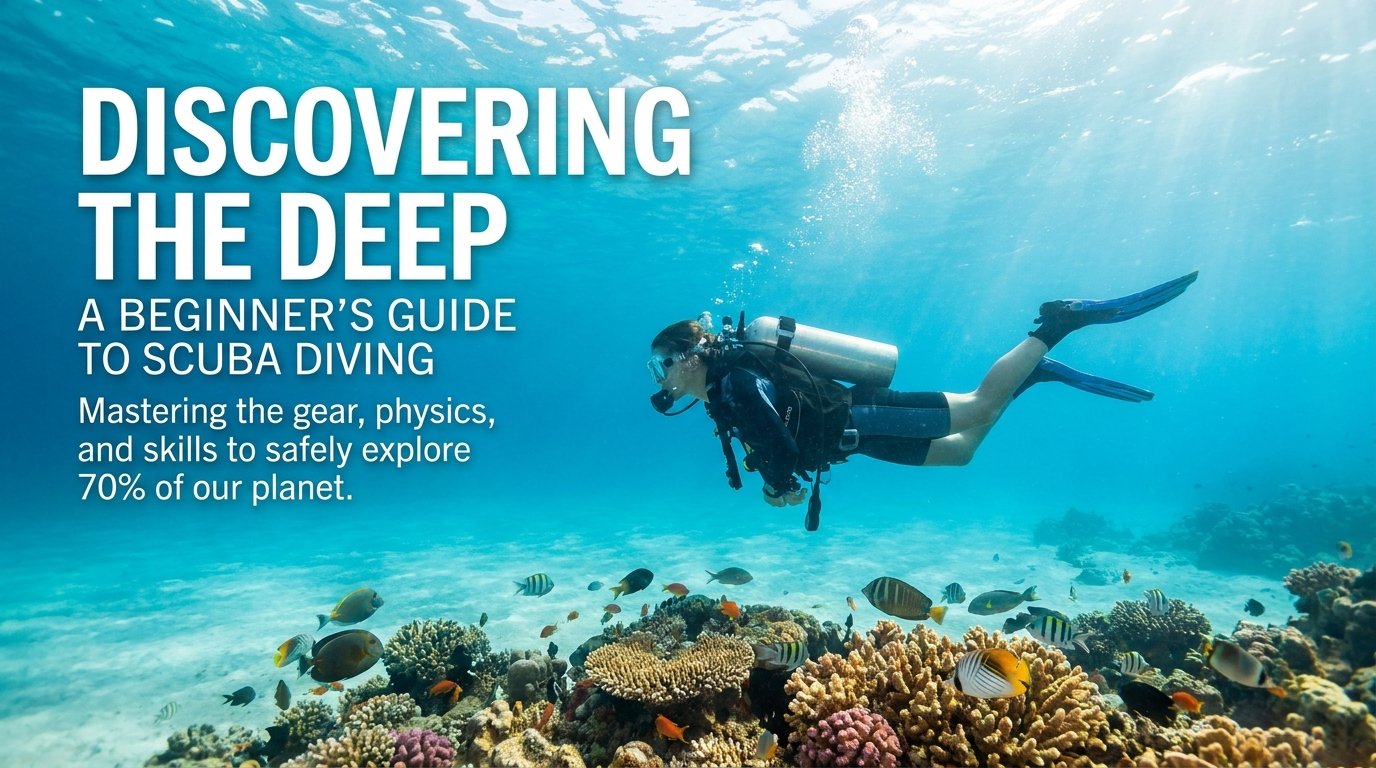
In The Lost Light, Sophie completes her Open Water Diver certification and discovers an entirely new world beneath the surface. Scuba diving is an important part of life throughout the Florida Keys, where coral reefs, historic shipwrecks, and brilliantly colored marine life draw divers from around the world. Here is a closer look at the real training, equipment, skills, and safety practices involved in learning to dive.
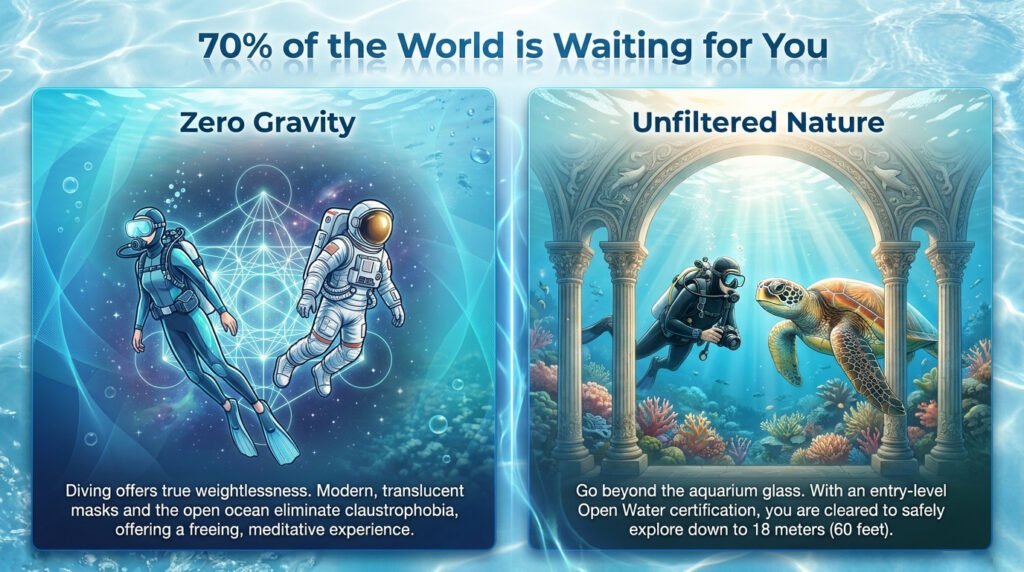
Most of us experience the ocean from the surface. We swim in it, sail across it, or stand on the shore and wonder what might be hiding below. Scuba diving changes that relationship completely. For a little while, a diver becomes part of the underwater world, moving almost weightlessly among reefs, fish, and landscapes that most people will never see firsthand.
That sense of wonder is one reason I wanted Sophie to learn to dive. Beneath the water, everything familiar changes. Light behaves differently, sound travels strangely, and even the simplest movements require thought and control. It is beautiful—but that beauty comes with rules that must be respected.
Becoming a Certified Diver
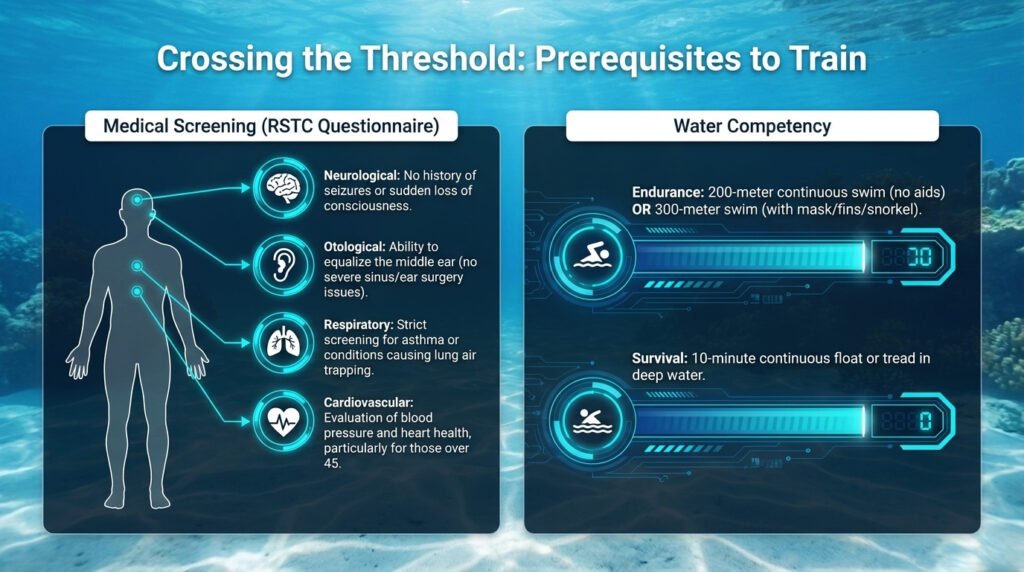
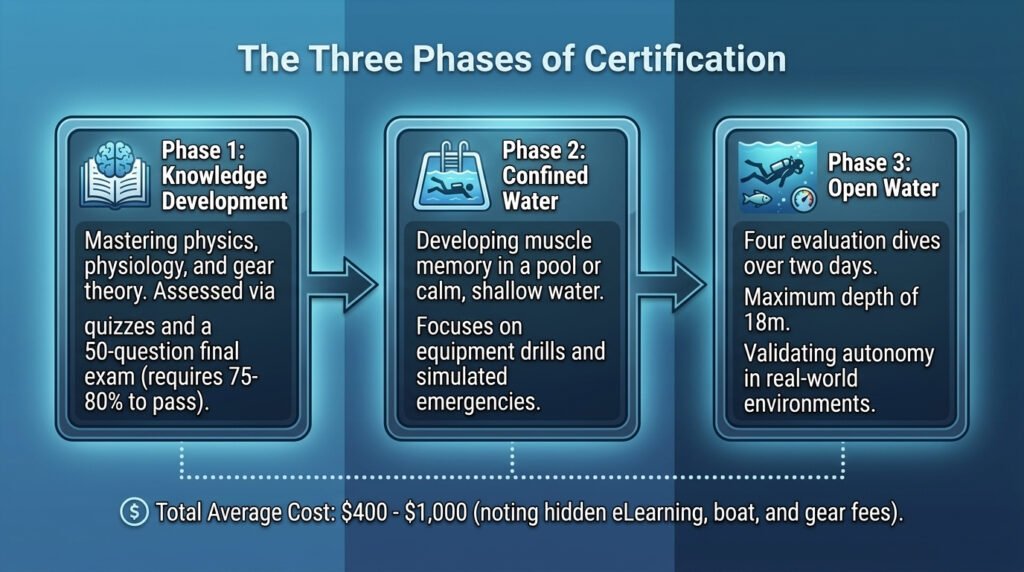
Learning to dive is not a matter of putting on an air tank and jumping over the side of a boat. Training progresses carefully, beginning with medical screening, basic water comfort, and academic lessons before students practice their new skills in confined water.
Only then do they move into the ocean or another open-water environment. There, under an instructor’s supervision, they demonstrate the skills needed to become certified. Sophie’s reef dive in The Lost Light is the last of these checkout dives—the final step in a process that began well before the opening chapter.
I like that scuba confidence is earned gradually. Students do not have to begin as fearless athletes. They learn one skill at a time, repeat it until it becomes familiar, and discover that remaining calm is often more important than being physically strong.
The Equipment—and the Buddy Beside You
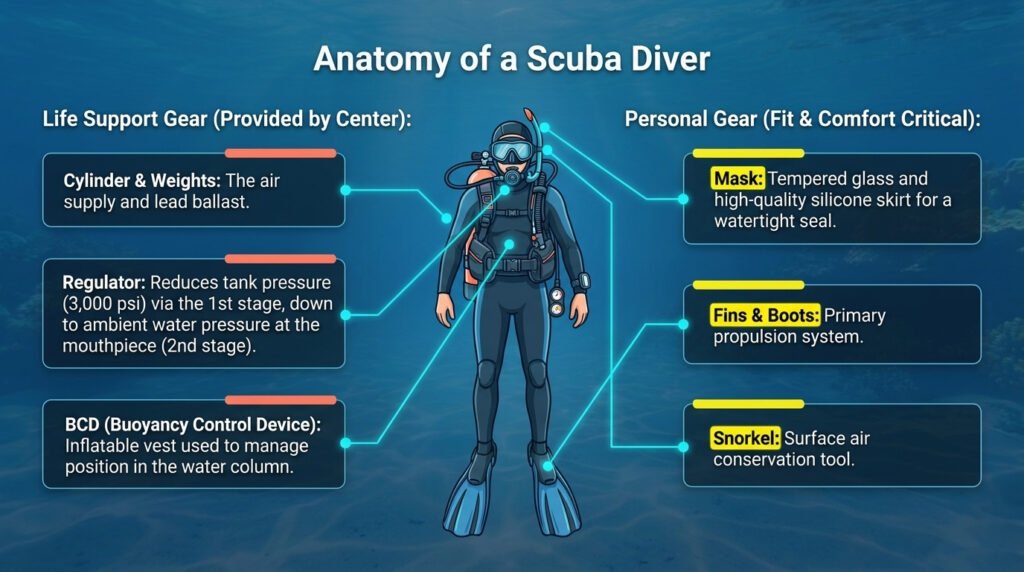
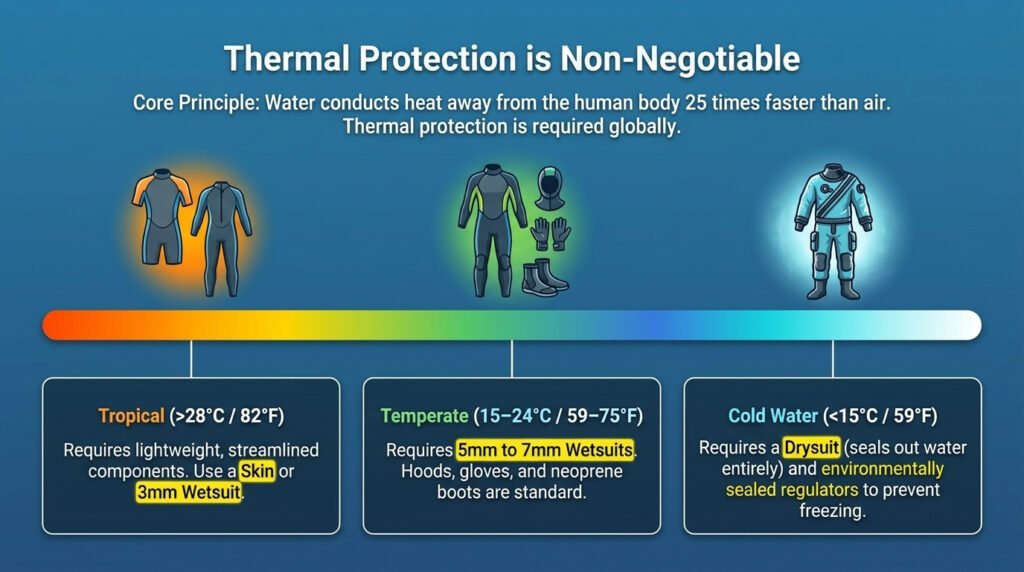
Scuba equipment can look intimidating when it is assembled for the first time, but every piece has a clear purpose. The mask allows a diver to see. The regulator makes the air in the cylinder breathable. The buoyancy compensator helps control position in the water, while fins make movement more efficient. Exposure protection helps a diver remain comfortable and protects the skin from sun, scrapes, and marine irritants.
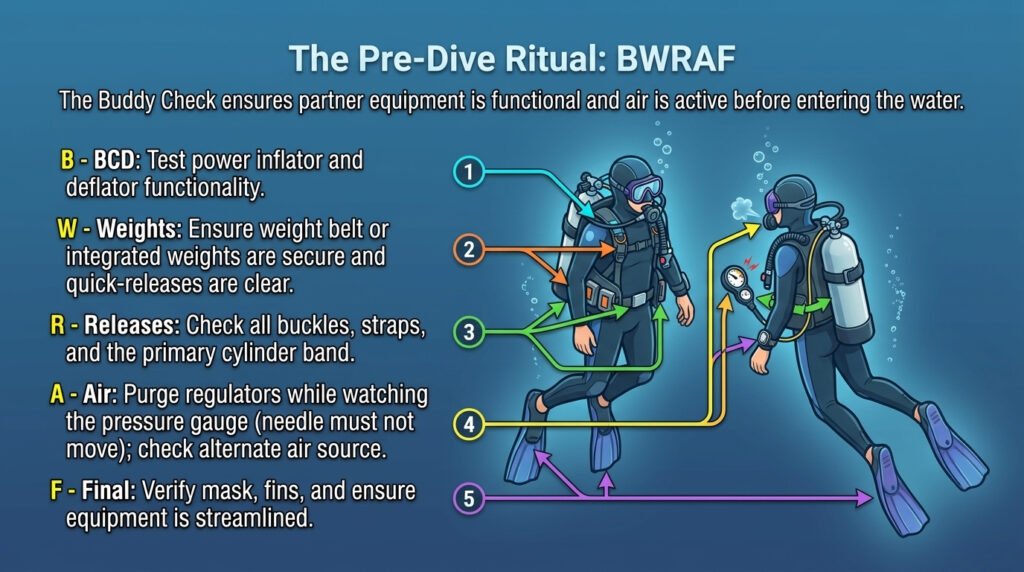
The most important safety system, however, is not something a diver wears. It is the buddy beside them.
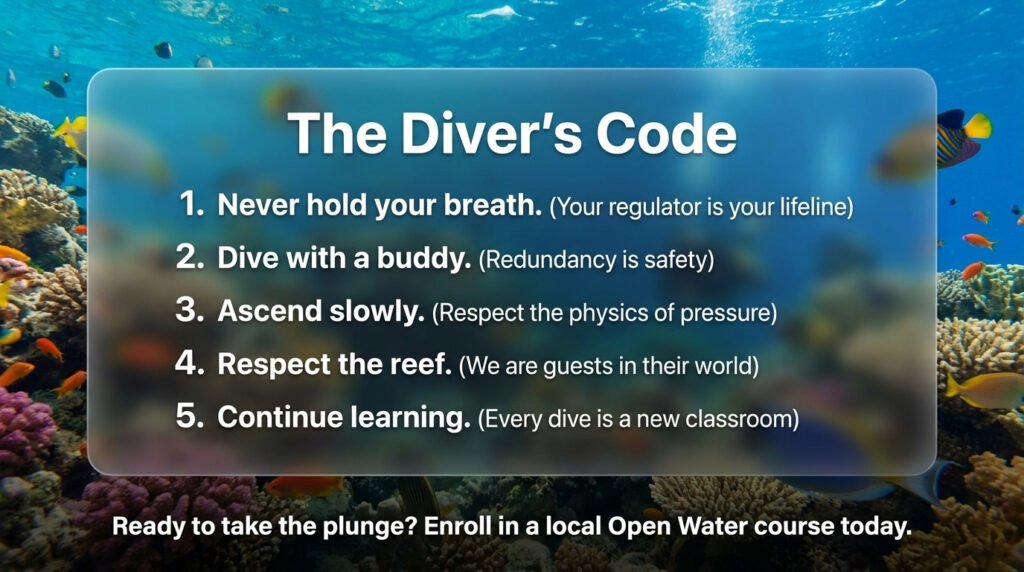
Before entering the water, buddies check one another’s equipment and make sure both divers are ready. That ritual of checking, communicating, and paying attention continues throughout the dive. One person may notice a loose strap, a changing current, or a problem the other has missed. Diving may offer moments of extraordinary solitude, but recreational divers are trained not to face the underwater world alone.
Pressure Changes Everything
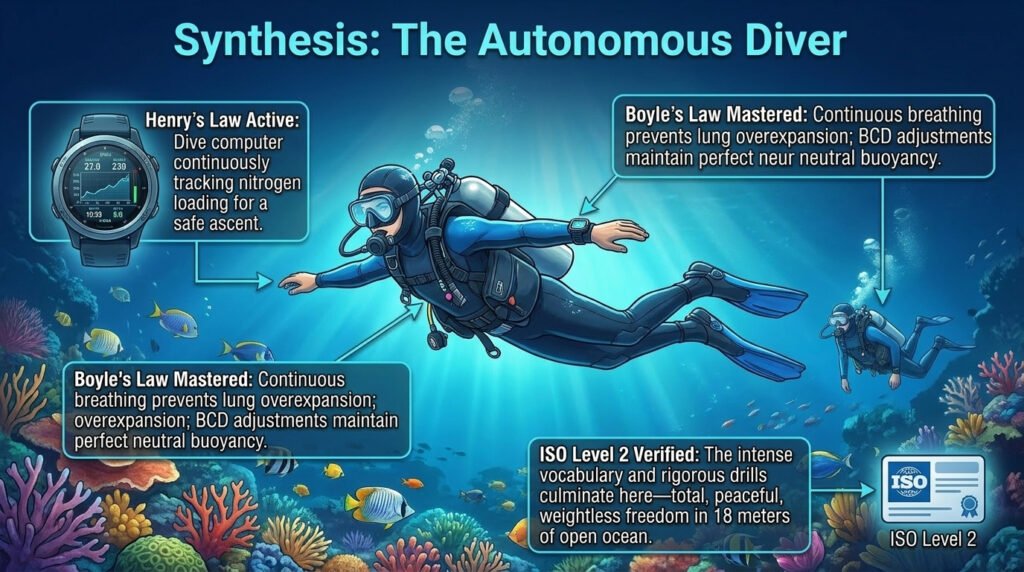
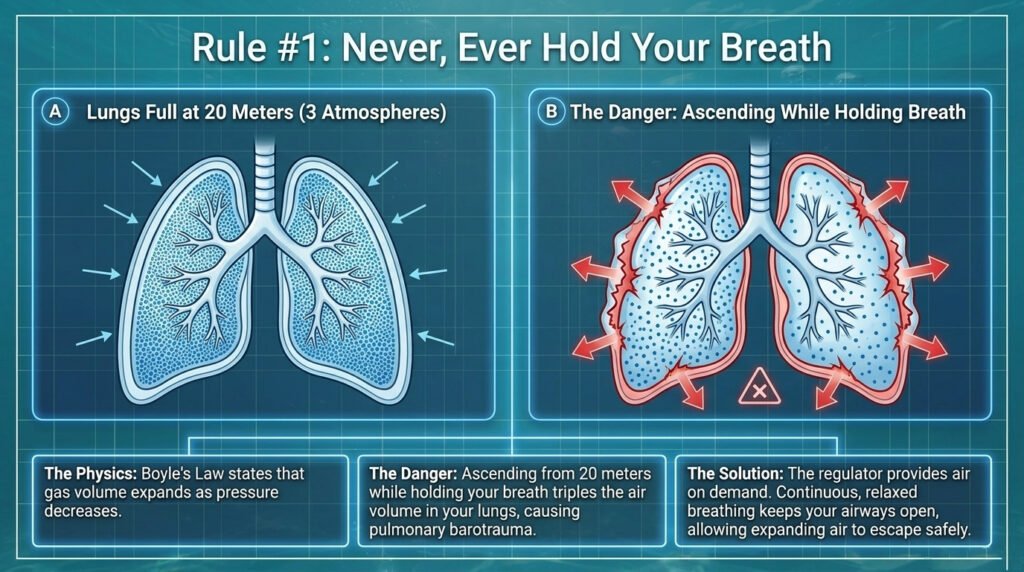
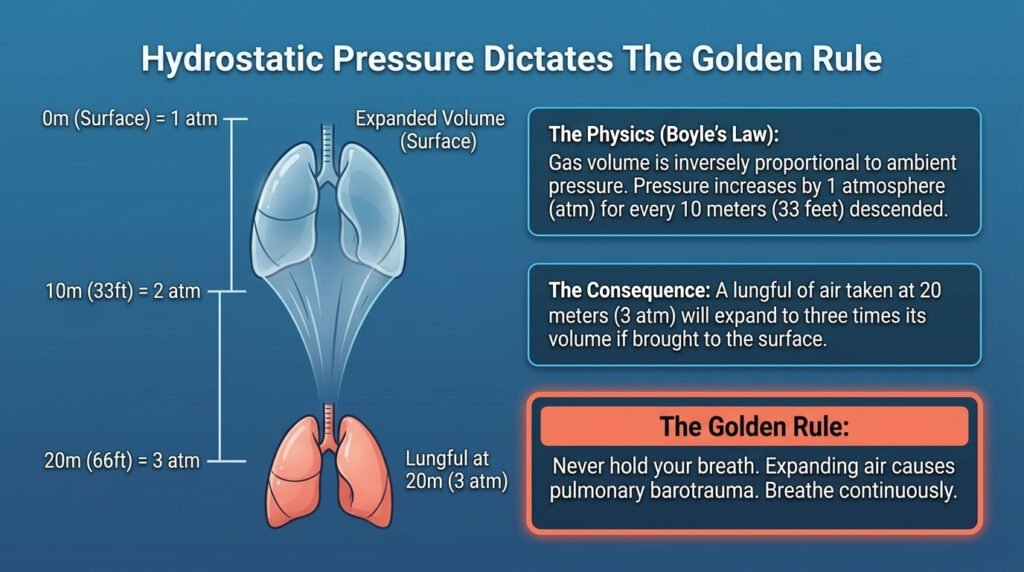
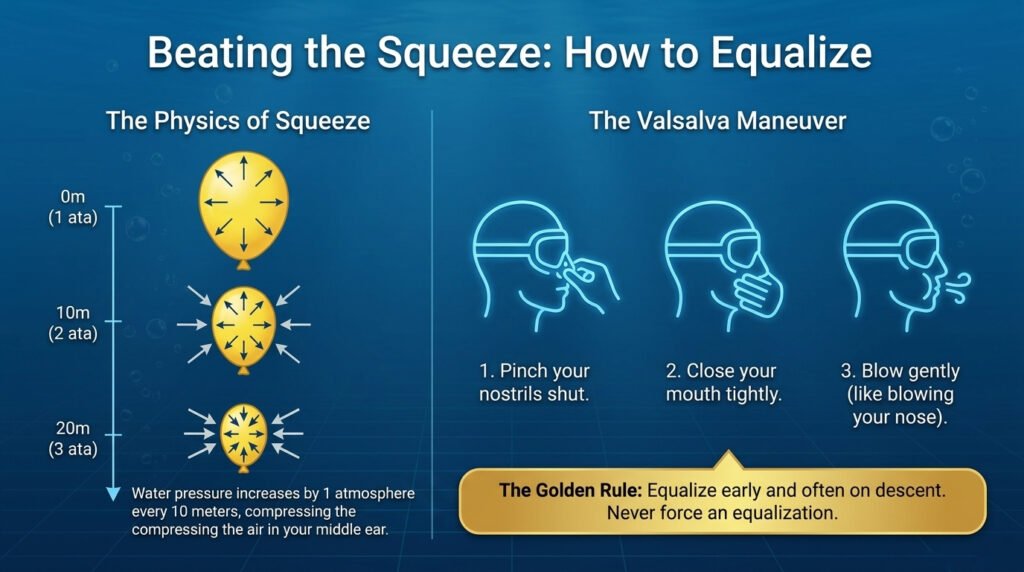
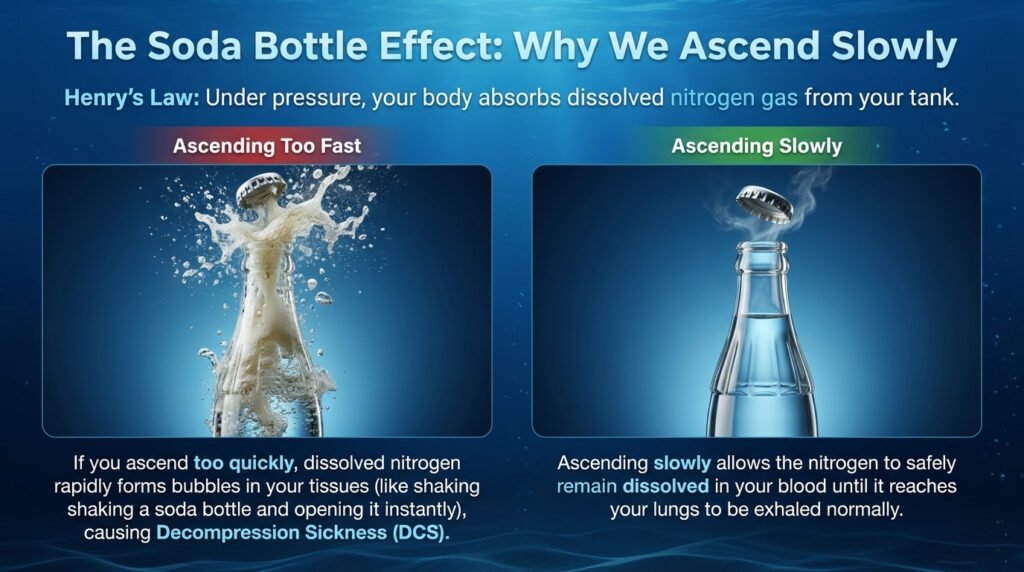
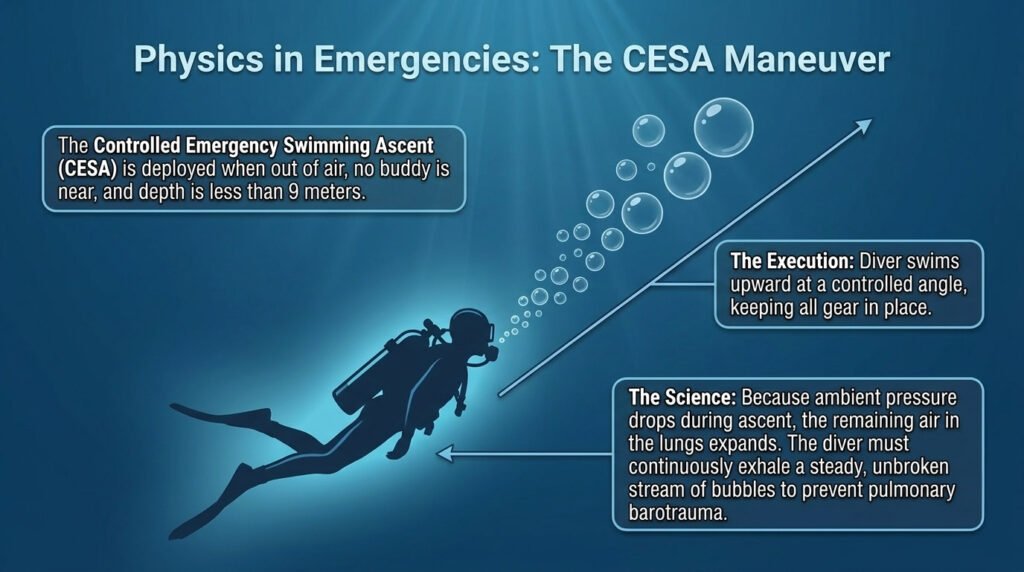
The ocean can appear calm while powerful physical changes are taking place inside a diver’s body and equipment. Water pressure increases with depth, compressing the air inside flexible spaces. During ascent, that air expands again.
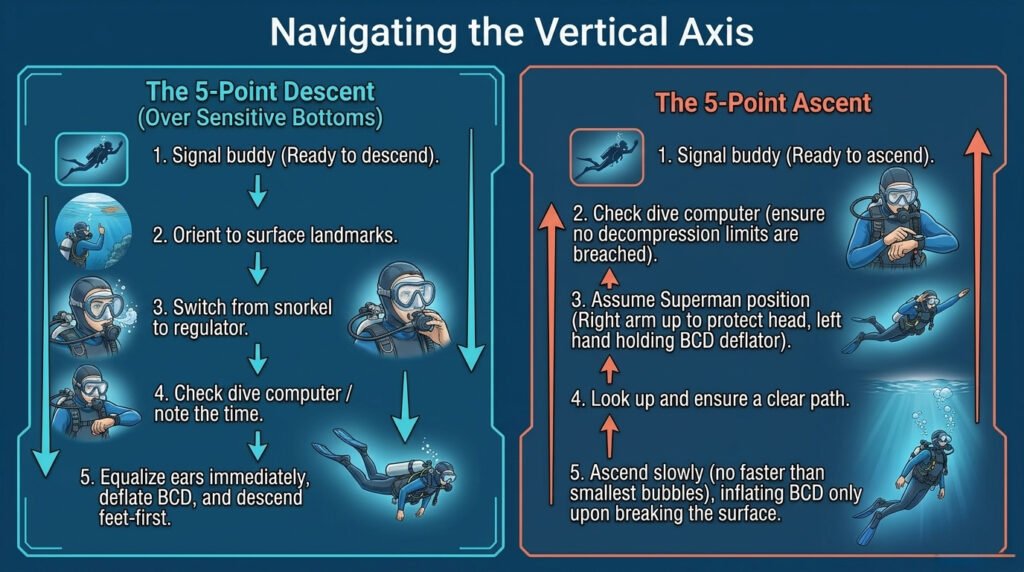
This is why divers are taught never to hold their breath and why a controlled ascent is so important. They also learn to equalize their ears early and gently during descent rather than waiting for discomfort to become pain. If the ears will not equalize, the correct response is to stop, rise slightly, and try again—not to force the descent.
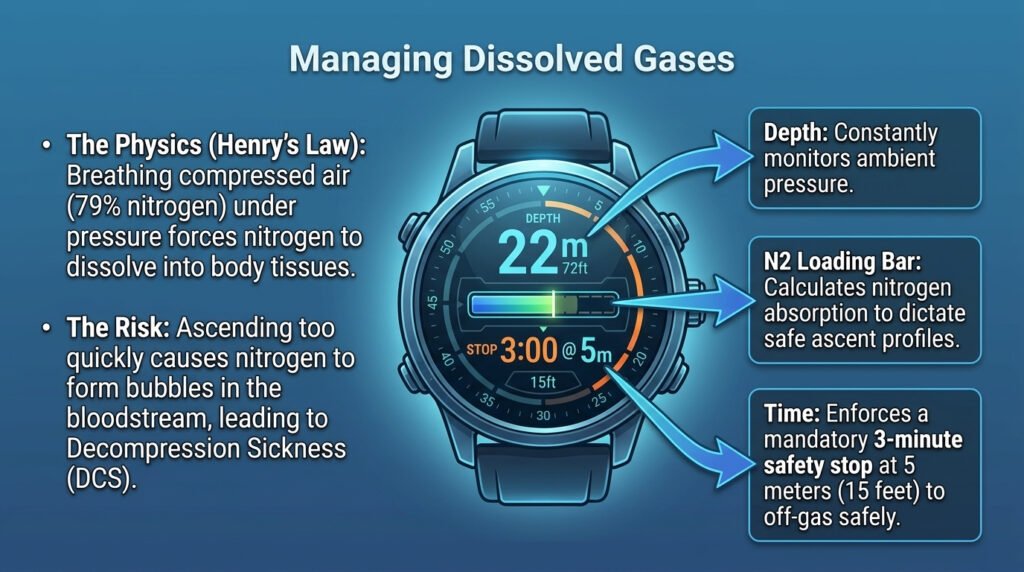
Dive computers help track depth, time, ascent rate, and nitrogen exposure, but they do not replace good judgment. The computer provides information. The diver must still understand that information, monitor the available air supply, remain aware of the environment, and stay in communication with a buddy.
Learning to Remain Calm
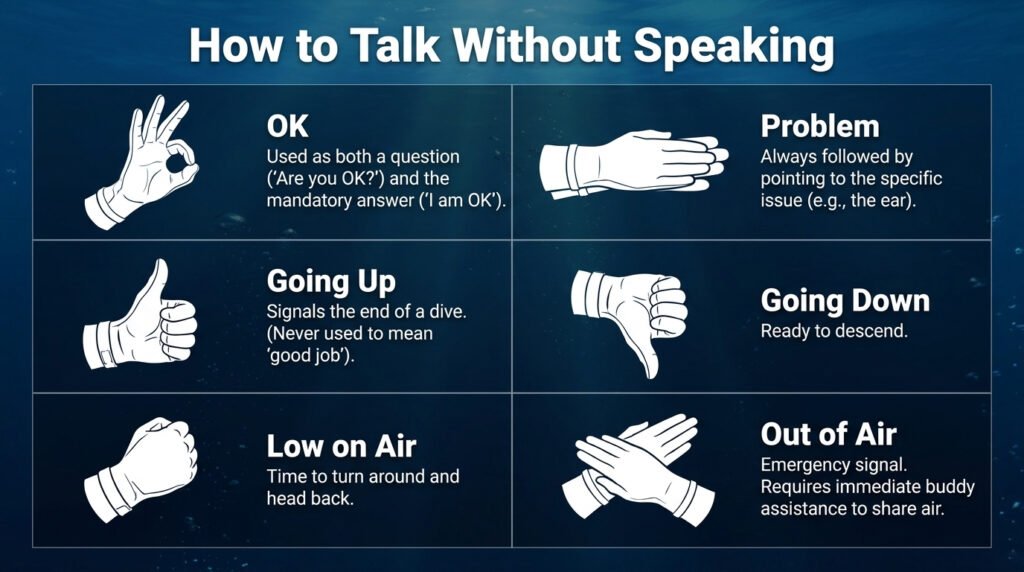
Divers cannot rely on ordinary conversation underwater, so they learn a shared language of hand signals. A few simple gestures can ask whether a buddy is okay, indicate remaining air, identify a problem, or signal that it is time to ascend.
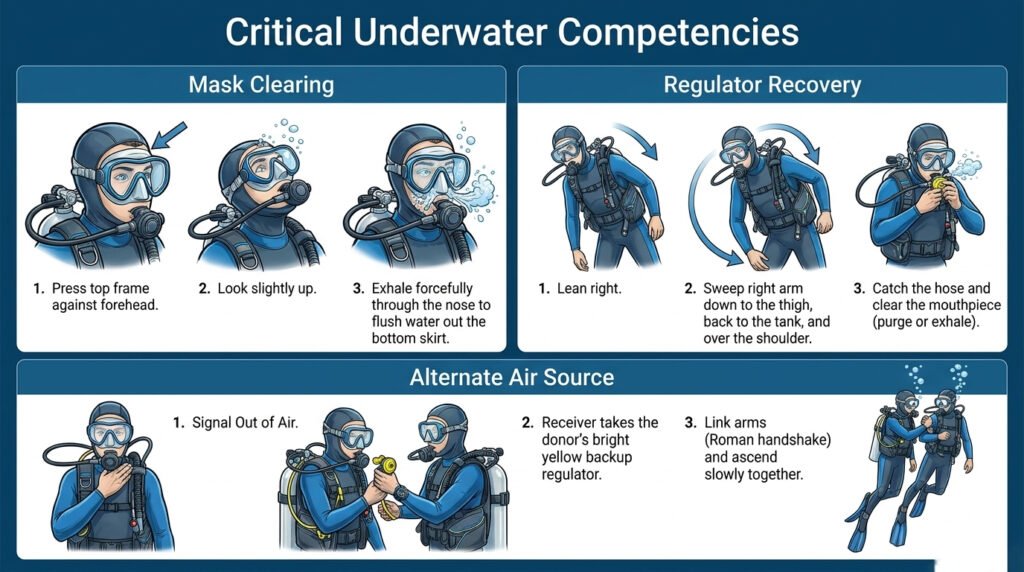
Students also practice skills that might initially feel uncomfortable, including clearing water from a mask and recovering a regulator. The purpose is not to frighten them. It is to make the correct response feel familiar enough that a small problem does not become a panic-driven emergency.
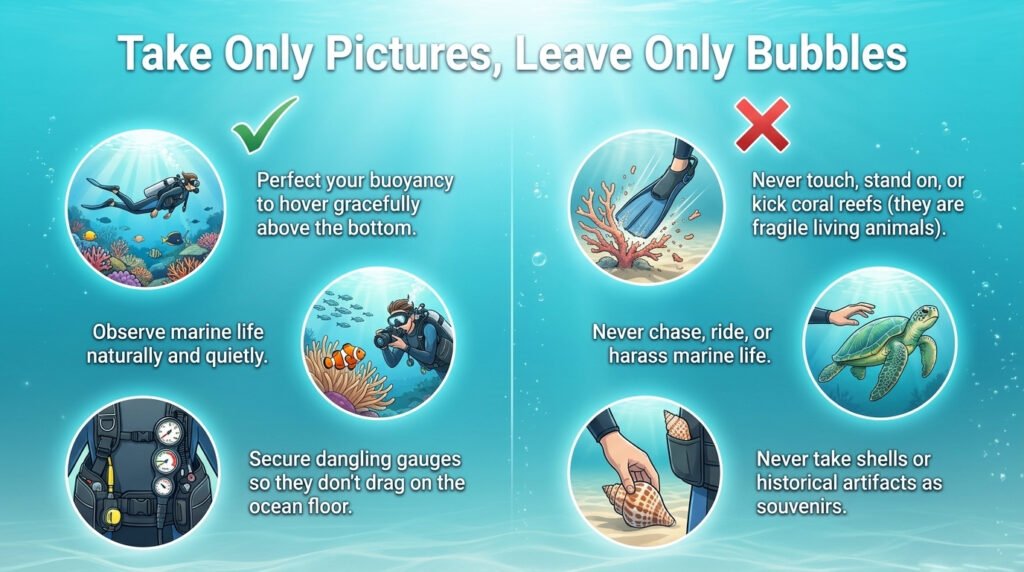
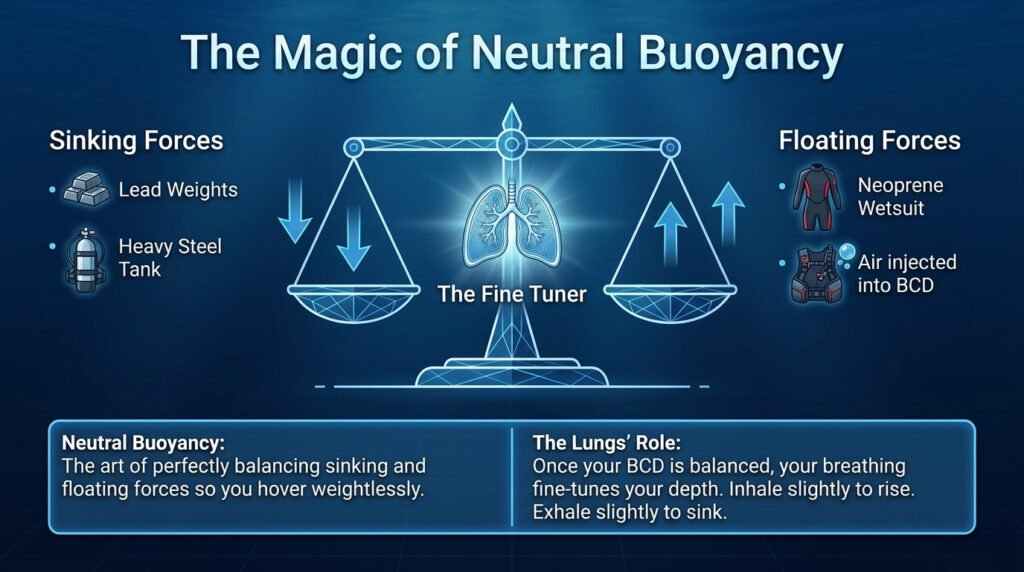
Buoyancy control is another essential skill. A well-balanced diver can hover above a reef without standing on coral, stirring up the bottom, or colliding with delicate marine life. It may look effortless, but that calm stillness comes from practice, careful breathing, and many small adjustments.
Returning Safely to the Surface
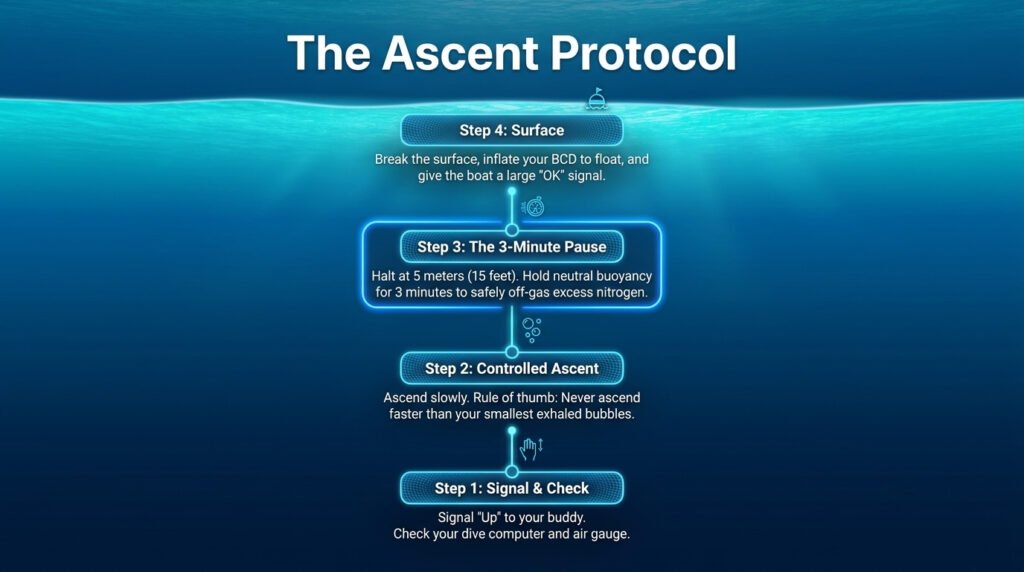
A safe ascent is slow and deliberate. Divers continue breathing, monitor their ascent rate, remain close to their buddies, and commonly pause for a brief safety stop before reaching the surface. That pause allows additional dissolved nitrogen to leave the body and adds another layer of caution to the dive.
Emergency-ascent techniques are also introduced during certification, but they are not do-it-yourself procedures. They must be learned and practiced under the direct supervision of a qualified instructor. The better defense against an out-of-air emergency is prevention: check the pressure gauge often, remain near a buddy, and begin the ascent with an appropriate air reserve.
Underwater, panic encourages a diver to rush. Training teaches the opposite response: stop, breathe, think, and act.
A Guest in Someone Else’s World
Certification is not the end of learning. It is permission to begin gaining experience within the limits of a diver’s training. Newly certified divers are qualified to dive with another certified diver—not to dive alone—and should choose sites and conditions appropriate to their abilities.
They also accept responsibility for protecting the places they visit. Coral may look like stone, but it is alive and easily damaged. Wildlife should be observed without being chased, handled, or fed. Nothing should be taken from a reef simply because it would make an attractive souvenir.
That sense of humility is one reason diving belongs so naturally in the Rising Tides world. The ocean rewards patience, preparation, and attention. It reminds divers that they are visitors—and that entering a beautiful place carries an obligation to leave it unharmed.
For Sophie, learning to dive is more than acquiring a new skill. It requires her to trust her training, trust another person, and remain calm when every instinct tells her to rush. Those are useful qualities beneath the water—and, as Sophie discovers, they are equally useful when following the trail of a mystery.
These slides provide a general introduction to recreational scuba diving and are not a substitute for professional instruction. Anyone interested in diving should complete a recognized certification course with a qualified instructor and follow the guidance of their training organization, medical professionals, and local dive operators.